
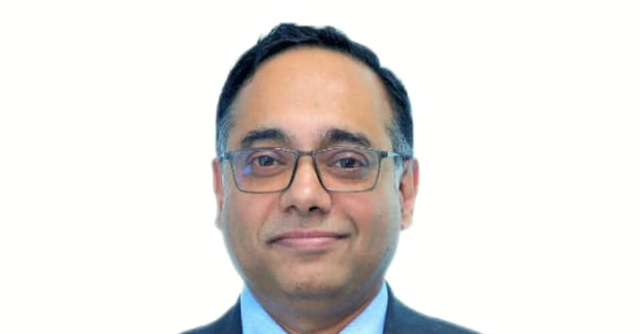
New Delhi, Feb. 17 -- As hospitals adopt AI to streamline operations and reduce clinical errors, many are discovering that technology alone does not solve structural and process challenges. TrioTree Technologies, a healthcare IT company focused on hospital systems, is positioning its AI and data tools around workflow automation and documentation.
In a conversation with TechCircle, founder and CEO Surjeet Thakur discussed practical AI use cases in Indian hospitals, the limits of automated diagnosis, and persistent data standardisation issues.
Edited Excerpts:
What specific technologies is your company investing in for hospital software?
We have been in healthcare for the past 13+ years. Of late, we have been focusing more on machine learning and AI because many redundant processes can be automated with these newer technologies. We also have ambient voice technology built into the application, which we call conversational AI.
Doctors and nurses can have a normal conversation, and the system will record it, and it can be in 182 languages, and it can be a mixture of languages. The system automatically filters out the healthcare-specific conversation and then groups it into relevant headers: diagnosis goes into diagnosis, orders go into orders, chief complaint goes into chief complaint, and history of presenting illness goes into history of presenting illness. We call that voice AI. It uses voice but puts AI as a wrapper around it and gives the output.
From your vantage point, where is AI helping in Indian hospitals beyond pilots? Can you share use cases that are in use today?
In healthcare, we are dealing with lives of people, and we can't do alpha testing or beta testing because it's a matter of life and death for someone. At the same time, clinicians and care providers, physiotherapists, nurses, everyone, are human, and there are chances of error. That error can lead to a fatal accident. Hence, technology becomes very important.
But the way I look at AI is as augmented intelligence. It helps the user look at what's generated and say: it has already generated a care plan for me, I can customise it to this patient, I can make small changes, and I'm done. What used to take about five minutes per patient, and you have to do it three times a day, so 15 minutes, can happen in less than a minute, and more accurately. This is a use case we are actually using in hospitals.
The second is the ambient AI I spoke about, the conversational AI. The system is listening, and it addresses an apprehension doctors often have: if I use technology, patients might feel I'm using the computer more and not talking to them, and the human touch will go, or it will increase the time. In India, doctors can see 60 to 80 to 100 patients in a day, which essentially means less than five minutes per patient. So the question is how we bring in technology while taking care of patients and clinicians, and still do clinical transformation.
That is where ambient AI comes in. If you are interacting with the patient or attendant, do it the same way. The system keeps listening to the conversation and presents it to you based on what you have conversed about. It's not just voice-to-text; it understands the conversation and removes things that are not relevant.
The conversation can include things that are important but not clinical. The voice AI filters those out, does not bring them into the system, and only puts the discrete clinical data into the relevant place. The only thing you have to do is a quick review, sign the prescription, and hand it to the patient. It supports 182 languages, including Indian languages like Bengali, Marathi, Malayalam, Tamil, Gujarati, and the conversation can be a natural mixture of Hindi and English, while the system still keeps track.
Where do you think AI is being over-promised in healthcare operations?
Whether we like it or not, doctors will remain at the centre of healthcare delivery, even after AI becomes big. That is not changing.
The notion being created that AI could do diagnosis is far-fetched. It can assist, it can augment, but it cannot diagnose. There are various parameters, and our body is so complex that you cannot ignore a single parameter before making a clinical judgement. So, self-diagnosis being done by AI is far-fetched and over-promised. I do not see that happening.
What is the hardest part of building a hospital data platform in India? Is it data quality, standards, legacy vendors, or organizational ownership?
Healthcare implementation is less about technology and more about change management. In India, the core challenges are data and awareness. Standards exist, but adoption remains limited.
The Government of India has adopted SNOMED as a national standard and made it freely available to hospitals. Yet many facilities continue to follow their own formats and processes rather than standardising. As a result, there is no uniformity in how data is captured or managed across institutions.
Accreditations such as NABH in India and JCIA internationally define what should be measured through KPIs, but they do not prescribe how to implement those processes. Each hospital interprets requirements in its own way, often resulting in the same objective being executed differently across facilities. When technology is introduced, hospitals expect it to replicate their existing workflows, treating long-standing practices as de facto standards.
This makes the challenge largely behavioural. It is less about deploying software and more about adopting common standards and best practices. Customisation demands then become continuous, as clinicians resist altering established workflows. Data standards exist but are not widely adopted; process standardisation is inconsistent; and reluctance to change remains the biggest bottleneck in building technology solutions in Indian healthcare.
How are hospitals approaching adoption-clinical improvements first, or operational and financial performance first?
What I see is hospitals adopting in operational departments first, where you are not touching the doctors, because that is where maximum resistance comes in and where the biggest change management has to happen.
Hospitals adopt technology on the operational side and then gradually take it to clinical, because in clinical, you need far more accuracy. I have been part of conversations where someone says an AI model will give 90% accuracy, and a doctor asks: but that 5% matters to me-who will own the outcome, who will validate the data, who monitors the drift of this 5%? That is a fair question, and the doctor is right.
So you see use cases where slightly lower accuracy is acceptable because it is operational. For example, while a patient is taking an appointment, based on various parameters, we predict whether the patient will come or not. If there's a higher probability, we won't remind the patient; if there's a lower probability, we remind more, so the patient comes in and there isn't a potential loss to the hospital. In that kind of use case, 97% or 95% accuracy is still okay. But when we take clinical judgment, we can't have that anomaly.
I call this a clinical transformation journey. Hospitals first do a dipstick check with operations. If they are happy, they take it to clinical. Clinical has many use cases, so they can start anywhere, but generally, they do operations first and then move to clinical.
How long do you think it will take for AI and hospital tech adoption to reach deeper into India's healthcare system?
There is a long way ahead. But in India, the beauty is the economy. You can get tea for 10 rupees at a roadside tapari, 200 bucks at an airport, and 750 bucks in a five-star hotel. That is the economy of scale. You have 50-bed hospitals, 100-bed hospitals, 350-bed hospitals, and chains of hospitals.
So we cannot say that because AI has not gone to the 50- or 100-bed hospital, it has not been adopted. In India, adoption itself will take around 15-20 years, maybe, to reach the grassroots level.
Things have started changing. Private hospitals have had a lot of influx of private equity in healthcare, so adoption of technology is higher because they are pumping in money. IT budgets have also gone slightly higher because private equity comes in for returns, and they understand they have to automate business processes. The more processes they automate, the more turnaround they can do, they can serve more patients, more patients mean more revenue, more revenue means more valuation, and then they can do an exit.
At the same time, I would say it is far-fetched to say it has touched 50-60% of lives in India, because that 50-60% itself is 70 crores, which would be maybe 50 big countries across the globe.
Over the next 12-18 months, where are you placing bets-workflows, deeper AI, or market expansion?
We are focusing on two broad priorities. First is geographic expansion-strengthening our presence in Oman and Bahrain and entering the Saudi market. Second is advancing precision medicine through technology.
We are investing in cognitive computing to enable early prioritisation in radiology workflows. We are also automating patient communication-for instance, if a patient is diagnosed with a condition, relevant education material can be sent automatically via AI on WhatsApp.
Clinical documentation remains a key area. In India, only about 1-2% of hospitals use end-to-end clinical systems, with much of the documentation still on paper. For AI models to work effectively, data must first be digitised and structured. We are building tools that make it easier for clinicians to document care, so AI models can run on top of that data.
In diagnostics and labs, pathologists currently review and sign off on all reports, whether normal or critical. We are developing tools that flag normal results and prioritise abnormal or critical ones, so specialists can focus their time where it matters most.
We are also working on predictive operational analytics and assistive clinical models. For example, if we can flag a potential sepsis case several hours in advance, there is a chance to intervene earlier, reduce complications, and improve patient outcomes.
Published by HT Digital Content Services with permission from TechCircle.