
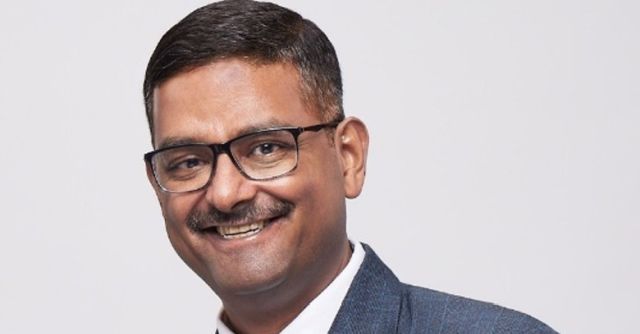
New Delhi, Dec. 8 -- As India accelerates toward a data-driven economy, enterprises are reassessing how information - physical and digital - is stored, secured, and leveraged for business outcomes. Cloud adoption, workplace automation, and evolving privacy mandates are reshaping the country's information management ecosystem, with organisations increasingly navigating hybrid data environments. U.S.-headquartered Iron Mountain, historically associated with secure physical records storage, is expanding its digital and data infrastructure footprint in India. In an interview with TechCircle, Arvind Subramanian, Executive Vice President and Managing Director for India at Iron Mountain, shares how legacy players are adapting to an AI and compliance-led landscape, and why India is emerging as both a market and development hub for the company. Edited excerpts.
With the country's information management landscape undergoing rapid digital transformation, what are your overall expectations for Iron Mountain India?
The shift toward digital and AI-led operations is accelerating, and our focus is to support enterprises in protecting and utilising their information more efficiently - regardless of format. This includes strengthening digital infrastructure and expanding data center capabilities as companies adopt cloud and hybrid models. We aim to play a role in helping organisations extract insights more effectively and maintain governance and data integrity as volumes grow.
How are you balancing your legacy in physical records management with the demand for digital and cloud-based solutions?
Physical records management remains necessary for several regulated sectors, and that business continues. The digital expansion builds on that foundation. Globally, and in India, platforms such as our InSight DXP allow customers to digitise records and apply AI-led extraction and governance. In India, the mix tends to reflect sector requirements - many organisations are modernising legacy archives while simultaneously adopting cloud environments for newer datasets.
How critical is India to Iron Mountain's global strategy, and how has the market evolved?
India has moved from largely storage-led conversations to discussions around automation, analytics, and integrated information governance. It has also become a strong talent and capability hub for us. Our Global Capability Center supports international operations and product development. Some digital solutions developed for the Indian market have been adapted elsewhere, which reflects the pace of adoption and innovation here.
What is driving your growth - traditional regulated sectors or digital-native enterprises?
Both categories are driving demand in different ways. Regulated industries - including BFSI and healthcare - manage large volumes of legacy data and face compliance pressures as operations digitise. Internal studies we've conducted indicate many BFSI players expect AI to automate a majority of routine back-office work, which creates urgency around modernisation. On the other hand, digital-native companies typically prioritise cloud-agnostic and AI-enabled models from day one. Interestingly, both groups are converging on the need to unify physical and digital information and create intelligent governance frameworks.
Which technologies are shaping Iron Mountain's next phase in India?
AI infrastructure, automation of workflows, and hybrid cloud models are shaping the direction. We are growing our data center capacity, including supporting high-compute requirements such as AI training workloads. Automation - such as metadata extraction and linking digitised content to enterprise systems - is becoming key to faster decision cycles and reducing manual processes.
Data localisation and privacy mandates are evolving. How do you address compliance expectations?
Localisation has strengthened demand for in-country data center facilities, and we operate across multiple Indian cities with adherence to global certification frameworks. Automation is playing a role as well - in areas such as retention, PII redaction, and legal holds - reducing reliance on manual recordkeeping and minimising compliance-related risk. The traditional chain-of-custody approach now extends into encrypted digital workflows.
As companies digitise, what skills and cultural shifts are influencing the workforce?
Digital literacy and data proficiency are becoming essential across roles, not just limited to IT. There is also a cultural shift - people increasingly work alongside AI-driven tools and automation. The balance between human judgment and technology adoption is central. Curiosity, problem-solving, and adaptability will matter as much as technical skills.
How do you see the information management industry evolving over the next decade?
The industry is moving from custodianship - simply storing information - to intelligence, where data becomes actionable. AI and automation will have a major influence, particularly in extracting value from large and diverse repositories. Hybrid models will remain important in India where physical and digital formats will coexist for a long time. Information management will increasingly influence compliance, accuracy, and decision-making.
Where do you see the biggest opportunities for Iron Mountain India in the next five years?
Growth is likely in sectors transitioning from digitisation to governance-led, AI-ready environments - including BFSI and the public sector. Geographically, data centre expansion is focused on high-growth regions such as Chennai. Demand for structured digital records, analytics, and secure hybrid environments will continue to define the opportunity landscape.
Published by HT Digital Content Services with permission from TechCircle.