
New Delhi, Dec. 17 -- As enterprises increasingly adopt AI-driven applications and data-intensive workloads, cloud infrastructure, GPUs, and localized compute are becoming central to business operations. Companies are seeking solutions that reduce latency, handle growing data volumes, and support emerging technologies such as edge computing and small language models. BharathCloud, a Hyderabad-based cloud services provider, works with businesses and startups globally to deliver secure, scalable, and cost-efficient cloud and AI infrastructure.
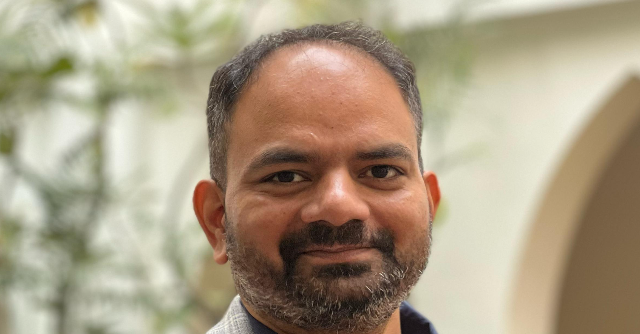
In a conversation with TechCircle, Rahul Takkallapally, Co-Founder of BharathCloud, outlines how rising GPU demand, evolving application needs, and data infrastructure challenges are shaping enterprise IT in India, and shares his perspective on cloud adoption, edge computing, and the potential of sovereign AI infrastructure.
Edited Excerpts:
When BharatCloud was founded, what core problems were you trying to solve for enterprises? Since then, the post-COVID period has reshaped how companies operate. How has your thinking evolved since the company's inception?
COVID shifted priorities toward working from anywhere. Enterprises wanted secure access to data without relying solely on office infrastructure. That became a basic requirement, even though it was not technically complex.
Since then, application needs have changed. Earlier, most enterprise applications ran on CPUs. Following late 2022, with the rise of large language models, new applications have increasingly required GPUs. Organizations are adopting these technologies to improve productivity and user experience, but older on-premise servers cannot support them. Many existing setups lack the GPU capacity required for newer applications.
At the individual level, people now use language models instead of traditional search for basic information. This familiarity has carried into organizations. Companies across sectors are experimenting with their own small language models for specific use cases. These efforts are often exploratory and cost-sensitive, focused on research rather than production. Traditional cloud pricing and credit models often fail to meet these needs.
As a result, demand for GPU infrastructure is rising faster than expected. There is also a broader push toward automation, cloud adoption, stronger security, reliable backups, and wider accessibility. Even traditionally conservative organizations are reconsidering on-premise data policies, influenced by pandemic disruptions, safety incidents, and internal risk concerns.
Decision-making has also changed. Earlier, technology choices were left to system integrators or a single IT head. Today, business leaders are more informed and directly involved. They are learning, asking questions, and shaping infrastructure decisions themselves.
Key trends now include greater reliance on GPU-based computing, stricter security and backup practices, lower latency requirements, and a growing interest in keeping compute closer to users. Edge computing and edge data centers are expected to see increased demand as these priorities continue to evolve.
How is BharatCloud approaching emerging technologies such as AI, edge computing, and hybrid cloud? Do these developments represent opportunities or challenges for the company?
These developments are opportunities, not threats. AI has existed for years; it is not new. What has changed is the focus on data quality, which directly affects how well systems work and how businesses use them. The issue today is not technology, but how it is interpreted and implemented by developers.
In many cases, developers recommend the most advanced or expensive solutions without assessing whether they are required. This often leads to overinvestment. We see this as a gap in the market.
In one case, a client wanted to build a small language model (SLM). Their development team estimated a minimum capital expenditure of around Rs.3 crore. We reviewed the requirements with the business owner and proposed testing the solution at a smaller scale. After testing, the system worked at a significantly lower cost than what was originally proposed. This was possible because we focused on customization rather than default configurations. Many providers do not take this approach and simply deliver what the customer asks for, without questioning the need.
At an industry level, Indian companies are participating, and government support is increasing. Data centre policies are already in place, and a cloud service provider policy is expected, with a focus on supporting Indian cloud providers. Better understanding of requirements should lead to more appropriate solutions.
Edge computing is another area of opportunity. For example, if data is collected from a drone in a remote area and needs to be accessed in real time elsewhere, processing must happen close to the source. Latency and local compute capacity become critical. This is why edge infrastructure matters.
However, the larger challenge in India is readiness at the ground level. There are large numbers of SMEs, SMBs, and MSMEs across sectors such as manufacturing, trading, and textiles. Many have not yet adopted basic cloud services. If they delay adoption, future demands such as GPU-based applications will become harder and more costly to address.
We work with industry associations to run awareness and education programs. Cost concerns are common, so discussions focus on total cost of ownership rather than upfront pricing. Once businesses begin their cloud journey, long-term adoption becomes easier.
Our approach is consultative. The focus is on solving current problems and adapting solutions as needs evolve, rather than one-time sales. Ongoing dialogue with customers helps guide future decisions and technology adoption.
Do you see locally hosted, sovereign GPUs in India meaningfully reducing the country's dependence on foreign AI infrastructure, or is reliance on global providers still largely unavoidable?
GPU demand is rising, India will need more time to scale domestic GPU production. At present, dependence on foreign suppliers is not limited to GPUs; it extends to servers as well. Global coexistence is both the current reality and the likely future.
From my perspective, coexistence is necessary, alongside clear rules on where data is stored and policies that support Indian companies. India cannot replicate China's model quickly. China began building its semiconductor ecosystem decades ago, while India has only recently acknowledged the need to act.
Policy support has led to progress in other sectors, such as energy and manufacturing, and similar efforts are now visible in semiconductors. However, India started late. Recent developments, including the Intel-Tata partnership, indicate movement in the right direction.
For now, the reality remains that most countries, except China, do not have fully developed domestic GPU capabilities. Semiconductor manufacturing is gaining attention and investment globally. With sustained policy support and industry participation, India can close the gap. A realistic timeframe could be around a decade. The government's role in encouraging this transition is significant.
How do you see cloud adoption evolving in India compared with global trends?
Cloud adoption is increasing, and this is evident from regular customer interactions. Many customers now work remotely and rely entirely on cloud systems. In several cases, customers who earlier assumed they needed to be physically present in the office have changed how they operate.
The focus is not only on technology but on how customer experience is evolving. As workflows move online, customers are adjusting their assumptions about productivity, access, and availability. The value they see is in flexibility and continuity rather than the underlying tools.
This shift is also supported by Indian companies working together to build confidence in cloud-based systems and deliver simpler implementations. As a result, adoption is becoming more widespread. Technology adoption overall is already increasing, and cloud adoption is progressing along the same path.
It is difficult to predict adoption percentages or timelines. Rather than projecting numbers, it is more useful to look at actual usage. At present, we work with around 200 customers. As this number grows to several thousand, awareness will increase through shared experiences and direct feedback.
Customer stories play an important role in this process. As more users describe how cloud adoption has changed the way they work, adoption is likely to accelerate. Based on what we are seeing today, the pace of adoption is expected to be faster than earlier assumptions.
Published by HT Digital Content Services with permission from TechCircle.