
New Delhi, Feb. 10 -- As India charges toward its $5 trillion economy milestone, the plumbing of its financial system is being quietly but radically re-engineered. Nowhere is this more evident than in the evolution of the secondary market for Non-Performing Assets (NPAs).
The traditional, often cumbersome methods of debt resolution are being replaced by a sophisticated ecosystem of specialized capital, yet this progress comes with a sharp regulatory pivot that is redefining how Indian businesses access global credit.
The New Architecture: Beyond "Cleaning the Books"
The secondary NPA market has transitioned from a mere disposal mechanism for banks into a functional asset class. Two pillars now define this landscape:
* Institutional Aggregation: The National Asset Reconstruction Company Limited (NARCL) and IDRCL have institutionalized the resolution of large-scale legacy stress. By acquiring assets with exposures over Rs 500 crore, they have stabilized the market, allowing banks to pivot back to their core mission: lending for growth.
* The Rise of Stressed Asset AIFs: Alternative Investment Funds (AIFs) have become the primary engines of the secondary market. With over 1,748 registered AIFs and commitments surging to Rs 13.49 trillion by January 2026, these funds provide the "turnaround capital" that traditional banks cannot. Unlike the "fire sales" of the past, these funds leverage the Insolvency and Bankruptcy Code (IBC) to acquire "value" assets at reasonable valuations, aiming for strategic restructuring rather than just liquidation.
The Regulatory Counter-Current: The End of "Cashless" Guarantees
While the internal market for distressed debt is maturing, a significant friction point has emerged in cross-border financing. The recently notified Foreign Exchange Management (Guarantees) Regulation, 2026, has effectively dismantled the popular "cashless guarantee" structure.
Historically, Indian subsidiaries of multinational companies could raise domestic debt backed by a non-resident guarantee without an immediate foreign exchange outflow. Under the new 2026 rules:
* 100% Cash Collateral: Guarantees are now largely restricted unless backed by 100% cash collateral in the form of a deposit from the non-resident.
* Strict Eligibility: Both the surety and the principal debtor must now be eligible to lend to and borrow from each other under existing ECB regulations.
While these measures are designed to safeguard national security and prevent "unreported/contingent indebtedness," they have undeniably increased the cost of capital for high-potential businesses.
The Macro Shift: RBI's October 2025 Pivot on Acquisition Finance
While the door to "cashless" offshore leverage closes, a new window for domestic "control financing" has opened. In October 2025, the Reserve Bank of India (RBI) issued draft directions that fundamentally reverse its decades-old aversion to acquisition financing.
For years, Indian banks were prohibited from funding the purchase of shares to prevent excessive leverage. The 2025 draft changes this paradigm, permitting banks to finance up to 70% of an acquisition's value, provided specific safeguards are met:
* Eligibility: The borrower must be a listed Indian company that has been profit-making for the last three years.
* Guardrails: Banks are capped at an exposure of 10% of their Tier-1 Capital for such financing, and promoters must bring in at least 30% equity contribution.
This "controlled opening" is a critical context for the distressed market. By legitimizing the use of bank debt for control transactions in the healthy market, the regulator has tacitly normalized the concept of "Leverage for Control". This shift provides the regulatory air-cover necessary for the more aggressive "Stressed LBO" strategies now being deployed by AIFs.
The Stressed LBO: A New Paradigm for 2026
As the era of "cashless" shortcuts ends and acquisition norms thaw, a robust form of the Leveraged Buyout (LBO) is emerging within the IBC framework. While the new RBI draft is expected to serve listed/healthy companies, the 2026 regulatory shift has opened a compliant "loan-to-own" pathway for distressed assets via Special Situation Funds (SSFs).
The 2026 shift toward "value-based distressed investing" is introducing a Hybrid LBO Model specifically for stressed assets:
* The "Loan-to-Own" Strategy: Global funds are increasingly using "credit bidding"-purchasing existing debt at a discount to eventually swap it for 100% equity control during the IBC resolution process.
* Relocating Leverage: India has not banned leverage; it has simply moved it from the banking balance sheet to the AIF ledger. Under the RBI 2025 Directions, banks are limited in their AIF contributions to prevent systemic risk "contagion".
* Operational versus Financial Engineering: Unlike Western LBOs that often rely on high debt-to-equity ratios for purely financial gain, the Indian "Stressed LBO" is focused on operational turnaround. Private equity sponsors now act as "operating partners," using their capital to bridge liquidity gaps while restructuring the debt.
Regulatory mismatch: SEBI has built the vehicle (SSF), but RBI hasn't yet opened the road (Permitted Transferee status) for it to drive on.
As of early 2026, the RBI has not yet formally included SSFs in the list of "Permitted Transferees" in its Master Direction on Transfer of Loan Exposures. This means while SSFs exist as a legal vehicle, they still cannot directly buy bad loans from banks until RBI closes this specific regulatory loop.
The RBI's Master Direction on Transfer of Loan Exposures (2021) currently lists ARCs, other banks, NBFCs, and Small Finance Banks as permitted buyers. SSFs are not yet on this list. SEBI has requested their inclusion, and the proposal was approved in principle by SEBI's board in consultation with RBI, but the specific RBI notification adding SSFs to the Annex of the Master Direction is still pending as of early 2026. Until this notification comes, SSFs often have to invest in Security Receipts (SRs) issued by ARCs rather than buying the loans directly, or invest in the distressed company's equity/debt securities.
Navigating the 2026 Landscape: The SSAF Solution
For the secondary NPA market to truly thrive, it must balance these new regulatory safeguards with the need for liquidity. If the AIF is the engine of the new market, the Securitisation of Stressed Assets Framework (SSAF) is its high-speed rail.
Introduced to replace the often-stagnant Security Receipt (SR) model, the SSAF facilitates the "true sale" of stressed assets into a tradable format:
* Speed over Stagnation: Unlike traditional ARCs where recovery can drag for eight years, SSAF notes are subject to a stricter five-year cap, forcing a faster churn of capital.
* 100% Cash Upfront: The framework mandates that the Special Purpose Entity (SPE) pay the lender entirely in cash, ensuring immediate liquidity for banks rather than "deferred" promises.
* Risk Discipline: With a mandated 5% minimum risk retention for resolution managers, the framework ensures "skin in the game," preventing the reckless dumping of low-quality assets.
The RBI has not yet notified the final "Securitisation of Stressed Assets Framework (SSAF) Directions, 2025.". The notification of the Securitisation of Stressed Assets Framework (SSAF) will be a step in the right direction, aiming to transform illiquid bad loans into tradable securities.
Conclusion: The Great Re-Rating
India's secondary NPA market is no longer a graveyard for bad debt; it is a high-stakes arena for professional turnaround experts. The transition from opaque, "cashless" cross-border shortcuts to the Standardized SSAF model signals that the plumbing of Indian finance has finally caught up with its $5 trillion ambitions.
By shifting the burden of leverage from public banks to private, specialized Stressed Asset AIFs, the regulator has protected the system while inviting the "rescue" capital necessary for true operational restructuring. The era of easy, guaranteed debt is over; the era of value-based, transparent distressed investing has arrived.
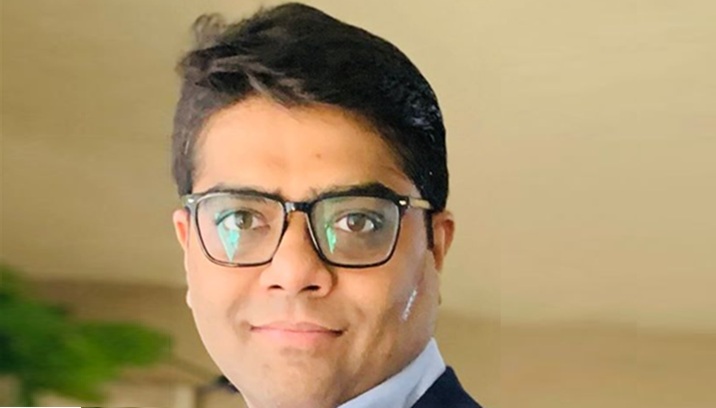
Rishabh G. Mastaram is founder of law firm RGM Legal. Views expressed in the article are personal.
Published by HT Digital Content Services with permission from VC Circle.