
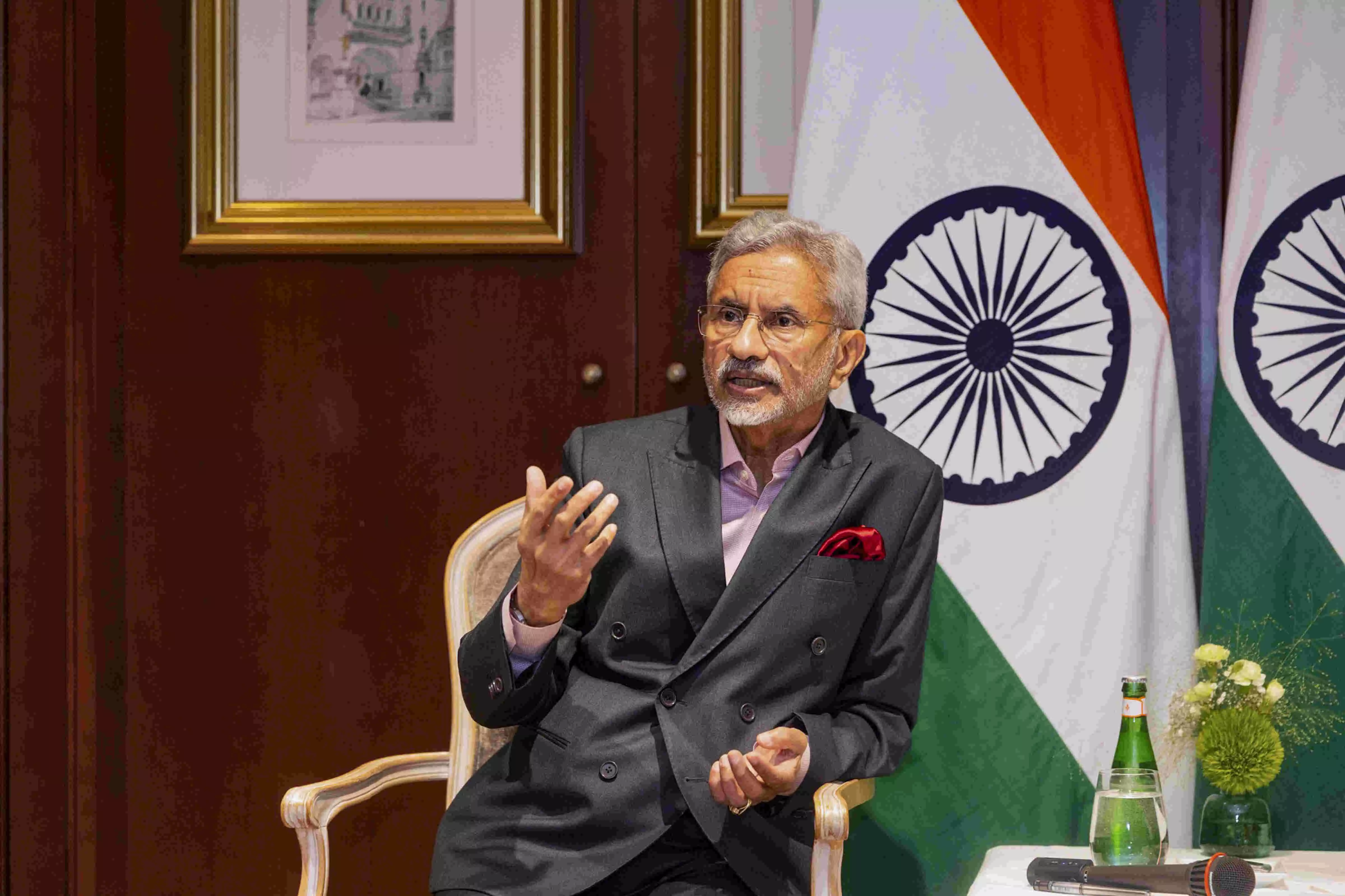
Pune, Dec. 20 -- The world today perceives India much more positively, External Affairs Minister S Jaishankar said on Saturday, adding that the evolution of the country's image is an undeniable reality. Addressing the 22nd convocation of the Symbiosis International (Deemed University) in Pune, Jaishankar also said the global economic and political pecking order has undergone a significant change. "A number of centres of power and influence have emerged. No country, however powerful, can impose its will on all issues," he said, "How does the world perceive us currently? The short answer is very much more positively and very much more seriously than before, and the reasons for that is both our national brand and our individual reputations, which have improved considerably," Jaishankar said.
The minister said Indians are regarded today by the world as people with a strong work ethic, with an aptitude for technology, who espouse a family-centric culture. "In conversations abroad, I largely hear words of praise for our diaspora. And increasingly, as ease of doing business and ease of living improve in India itself, for us as people, nation, and society, the old stereotypes about India are steadily being put behind," he said. "Of course, there is much more that we need to do in our journey of progress and modernization, but this evolution in our image is an undeniable reality," Jaishankar said. "Our figures vouch for this transformation. Among them, the growing number of global capability centres in India, the increasing demand for Indian talent and skills abroad, and the individual successes of people. And this extends equally to us as a collective," he said. Perhaps more than others, India is today defined by its talent and by its skill, the minister said. All that has helped to shape our national brand, he added. "How do we Indians approach the world? Again, I would say clearly, with more confidence and with more capability. "But there is a difference that is worth noting. Most nations have made their presence felt in the world through economic interactions, be it trade, investment, or services. "Naturally, that has been our pathway as well, and each of these metrics, each of these metrics has been increasing. But what distinguishes us, however, is the relevance of human resources," he said.
This often takes the form of a debate focusing on manufacturing versus services, he said, adding that in reality, the two are actually closely interlinked. "A large economy like ours must develop substantial and contemporary manufacturing if it is to keep abreast of technology, and if it is to imbibe and generate an industrial work culture. Only then, only then can we hone our capabilities even in the services sector. "As incomes rise and demands grow, a range of socio-economic requirements need to be addressed more effectively. We will need not just more engineers, doctors, and managers, or scientists, techies, and lawyers, but equally, teachers, researchers, historians, artists, and sportspersons. "Bear in mind that in the last decade alone, our higher education institutions have broadly doubled in number over what they had been before and there is room for more growth and restrictive improvement," he said.
Globalisation has fundamentally altered the way we think and work, the minister said. "After decolonization, many nations were able to progress and prosper because they now control their own destinies. The quality of choices and the wisdom of policy have made a crucial difference. "In India's own case, we have seen how leadership and governance have led to ups and downs in various phases in our economic growth and in our social transformation. The nation that has gained the most in this era is China. But we ourselves have done well, especially in the post-reform era, even more in the last decade. "In contrast, much of the Western world now feels that it has stagnated, a sentiment that has increasingly come to acquire a political meaning. Western elites consciously chose to shift production to maximize profits. Their competitiveness has eroded over the years, accelerated by their lifestyle, he said. Their demographic predicament has been an added factor, he added. The cumulative result of all these happenings is that the global economic and, thereafter, political pecking order has actually undergone a very significant change, Jaishankar said.
Published by HT Digital Content Services with permission from Millennium Post.