
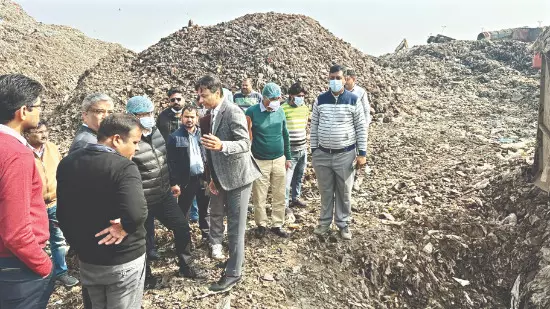
New Delhi, Jan. 28 -- Sanitation and waste management have emerged as central pillars of the Municipal Corporation of Delhi's (MCD) Budget for 2026-27, with a series of measures aimed at reducing landfill dependency, improving neighbourhood cleanliness and strengthening pollution control mechanisms across the city.
In the backdrop of MCD presenting its first-ever surplus budget, civic officials said a significant portion of planning and capital investment has been directed towards modernising waste handling systems and improving on-ground sanitation services. The budget lays emphasis on moving away from dumping practices towards scientific processing and decentralised waste management.
Among the key initiatives is the redevelopment of the Bhalswa, Ghazipur and Okhla landfill sites, once they are fully cleared. The reclaimed land is proposed to be converted into green spaces, organic gardens and community facilities, marking a shift from landfill-centric waste disposal to environmentally sustainable urban planning.
To strengthen daily sanitation operations, the Corporation plans to remove garbage dumps and compactors from major roads, relocating them to fenced sites, covered containers or mini transfer stations within wards. Door-to-door waste collection will be further reinforced, with stricter contractual conditions imposed on private collection agencies.
The budget also provides for expanding bio-methanation and waste-to-energy infrastructure. Three bio-methanation plants for wet waste processing are at various stages of operation and commissioning, while large waste-to-energy plants proposed at Narela-Bawana and Ghazipur are expected to significantly reduce the volume of waste reaching landfills in the coming years. Capacity enhancement of existing plants at Okhla and Tehkhand has also been outlined.
Drainage and cleanliness in residential areas have received attention through the deployment of suction-cum-jetting and super-sucker machines for year-round drain cleaning, particularly in narrow lanes and unauthorised colonies, to prevent water logging and related health hazards.
Published by HT Digital Content Services with permission from Millennium Post.