
New Delhi, Jan. 11 -- There's a popular song picturised on Dilip Kumar that was originally used in the Hindi film 'Gopi', but has since acquired a kind of cult status and is often quoted as a commentary on kalyug or the age we live in. The line goes like this:
"Ramchandra keh gaye Siya se, aisa Kaljug ayega
Hans chugega daana dunka, kauya moti khayega."
Loosely translated, it would mean that Ramchandra says to Sita that a day would surely come when the swan will peck at broken grain while the crow will feast on pearls.
Where am I going with this?
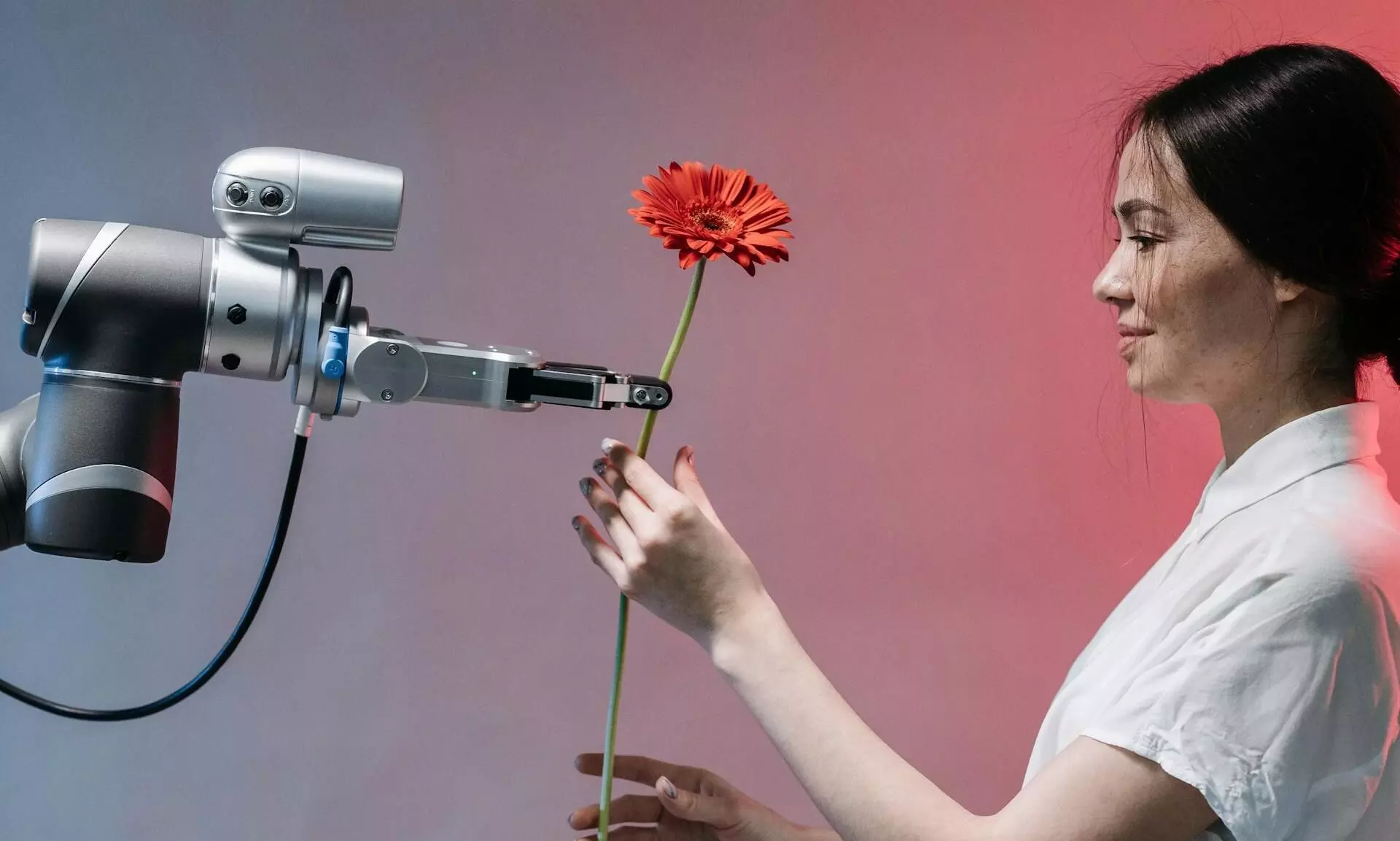
I find myself suddenly reminded of this line and wondering whether we can juxtapose the swan with humans and the crow with artificial intelligence, to deduce that humans are increasingly behaving more and more robotically while software and tools such as 'ChatGPT' are becoming, quite amazingly, more and more human.
It's a slightly unsettling thought, but not an entirely implausible one. We have, after all, trained ourselves to operate on templates - auto replies, calendar reminders and voice notes sent at double speed and emotions reduced to emojis because who really has the time to type a full sentence anymore? In our over-busy, over-committed, over-packed lives, it is humans and interestingly, often the more successful or privileged among us, who are turning increasingly robotic. Measured responses, routines that begin to resemble regimes, and cultivated objectivity in the pursuit of balance - taken so far that we sometimes no longer know what our own opinion actually is! We listen with half an ear, respond with half a thought and often disengage even before the conversation has properly begun.
Meanwhile, the machine listens patiently. It waits. It responds in full sentences. It doesn't interrupt. It doesn't glance at its phone while you are speaking - because, well, it is the phone.
The real irony is not even that AI can process information faster. That was always expected. The irony is that it appears to process us better. Ask a human being how you're doing and you may get a distracted 'haan-haan, theek' while their eyes are fixed elsewhere. Ask the machine and it will ask a follow-up question. It will remember context. It will even say things like, "That sounds difficult," without sounding bored or merely polite.
This role reversal is quietly slipping into everyday life. Parents worry that children don't talk enough at the dinner table, but the same children can have long, articulate exchanges with an interface that never judges or loses patience. We pride ourselves on emotional intelligence, yet outsource listening, articulation and sometimes even empathy to a tool.
Of course, there is a danger in romanticising this. AI does not feel. It does not love, resent, forgive or even sulk. It mirrors us, drawing from vast oceans of human expression. But perhaps that is precisely what makes the moment worth pausing over. The machine is reflecting back qualities we are slowly unlearning - attention, articulation and curiosity. The pearls were always ours; we just seem to have misplaced them.
There is also a faintly comic side to all this. We worry about machines becoming too human, yet we have no problem becoming slightly mechanical ourselves. We complain about automation while setting alarms to remind us to drink water. We fear loss of agency while happily surrendering memory, navigation, spelling and now conversation. It's not dystopia. Yet. It's just convenient. And convenience has a way of reshaping behaviour before we realise what we've traded.
What does this mean for families, friendships, classrooms and workplaces? It's too early to say. We are in the middle of an evolving reality, not at the end of it. Perhaps AI will push us to reclaim what makes us distinctly human. Or perhaps we will adapt around it, blurring lines further. Most likely, it will be messy, uneven, occasionally amusing and occasionally worrying, much like every other technological shift we have lived through.
Shakespeare famously framed existence as a stark choice with the question: To be or not to be. Today, the question may need a small update. To be AI or not to be AI?
Supriya Newar is a widely published writer and poet from Calcutta. Besides being a music aficionado, she is also an avid traveller. She may be reached at connect@supriyanewar.com
Published by HT Digital Content Services with permission from Millennium Post.