
New Delhi, Jan. 8 -- Madhya Pradesh is preparing to script a significant new chapter in wildlife conservation with a scientifically planned effort to restore the wild buffalo, a species that vanished from the state's forests over a century ago. The initiative, now in its final preparatory stage, is being seen as a landmark step that goes beyond symbolic conservation and aims to rebuild lost ecological systems.
Chief Minister Dr Mohan Yadav has described the project as a natural progression in the state's biodiversity journey, following the cheetah reintroduction programme. He said the return of the wild buffalo would strengthen Madhya Pradesh's ecological identity, adding depth to its standing as the country's 'Tiger State' and 'Leopard State'. The effort, he stressed, is not merely about bringing back a species, but about restoring balance to forest ecosystems that once depended on it.
Under the plan, wild buffaloes will be brought from Assam and reintroduced in the Kanha-Kisli landscape, with Kanha Tiger Reserve identified as the most suitable site. The decision follows an extensive scientific assessment by the Wildlife Institute of India, which studied grassland quality, water availability, human pressure and the historical presence of the species. The findings confirmed that Kanha's grasslands had once supported healthy wild buffalo populations and continue to offer ideal conditions.
The extinction of the species in Madhya Pradesh was the result of unchecked hunting, habitat degradation, shrinking grasslands and human encroachment during the colonial period. Today, India's remaining wild buffalo population is largely restricted to Assam, with a small and vulnerable presence in neighbouring Chhattisgarh, making conservation intervention urgent.
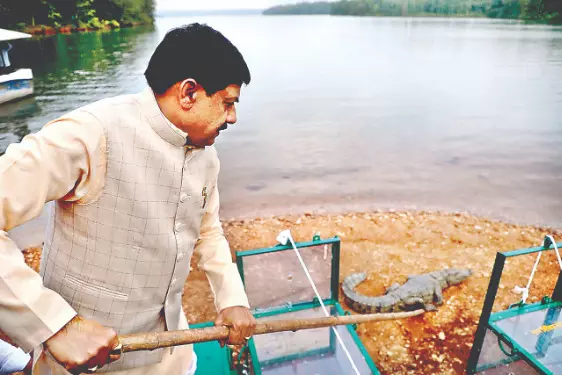
The inter-state cooperation behind the project was discussed during a meeting between the chief ministers of Assam and Madhya Pradesh in Guwahati. As part of a mutually agreed exchange, Madhya Pradesh will transfer three tigers and six crocodiles to Assam, while also receiving two pairs of rhinoceroses, which will be housed at Van Vihar National Park.
The reintroduction will follow a phased approach. Between 12 and 15 wild buffaloes will be brought in annually over the first three years. Initially, the animals will be kept in predator-proof enclosures, with infrastructure expected to be ready by early 2026. Genetic studies have shown minimal variation between the extinct Madhya Pradesh population and existing buffalo populations in Assam and Chhattisgarh, making the translocation scientifically sound.
Conservationists believe the return of the wild buffalo will revitalise grassland ecosystems, support other herbivore species and help maintain natural predator-prey dynamics. For Madhya Pradesh, it represents a move from protection to restoration-an effort to reclaim a lost part of its natural heritage with long-term ecological vision.
Restoring a Lost Predator
Prime Minister Narendra Modi launched the Cheetah Project by releasing African cheetahs in Kuno National Park, restoring an extinct species to India on September 17, 2022. He emphasised environmental conservation, patience for the cheetahs' adaptation, revival of grassland ecosystems, growth of eco-tourism, and India's commitment to balancing ecology with economic development. The Prime Minister said cheetahs need time to adapt, adding that their return will revive grasslands, boost biodiversity, strengthen eco-tourism and create local livelihoods-showing that ecology and development can move together.
A Two-State Conservation Pact
Under a carefully structured agreement, Assam will supply Madhya Pradesh with 50 wild buffaloes over three years, along with a pair each of rhinoceroses and elephants, and king cobras, subject to availability. In return, Madhya Pradesh will transfer a pair of tigers and six crocodiles, reflecting a rare model of cooperative wildlife conservation.
Weaving Jobs, Growth & Heritage
Madhya Pradesh is steadily emerging as one of India's most promising textile hubs, driven by a clear focus on jobs, investment and innovation. From handloom clusters to large-scale manufacturing, the state has placed textiles at the heart of its employment-led industrial strategy. At the National Conference of Textile Ministers in Guwahati, Chief Minister Dr Mohan Yadav outlined how Madhya Pradesh is blending tradition with modern industry. Iconic products such as Maheshwari and Chanderi sarees continue to anchor the state's identity, while new thrust areas-organic cotton, mulberry silk, man-made fibres and technical textiles-are opening fresh economic opportunities, especially in tribal-dominated regions. A key catalyst is the PM MITRA Mega Textile Park in Dhar, the country's first of its kind, which is progressing rapidly. Designed as an integrated manufacturing ecosystem, the park is expected to attract large investments, strengthen the textile value chain and generate employment for lakhs of people. Over the last 15 years alone, more than '25,000 crore has already flowed into Madhya Pradesh's textile sector. Equally significant is the emphasis on women-led growth, with thousands being linked to looms, mills and allied activities to build sustainable livelihoods. Backed by regional industry conclaves and investor-friendly policies, Madhya Pradesh is positioning itself not just as a production base, but as a long-term partner in India's textile journey-one that weaves growth with heritage and global ambition.
Published by HT Digital Content Services with permission from Millennium Post.