
Pune, Jan. 29 -- On the leafy campus of the Film and Television Institute of India (FTII), cinema isn't treated as a product alone, but as a practice - slow, layered and deeply human. Established traditions coexist with new screens, new formats and new expectations, as the institute negotiates a changing education and media landscape.
As higher education reforms reshape academic structures across the country and digital platforms redefine storytelling, FTII is re-examining how filmmakers are trained and what kind of cinematic knowledge deserves preservation.
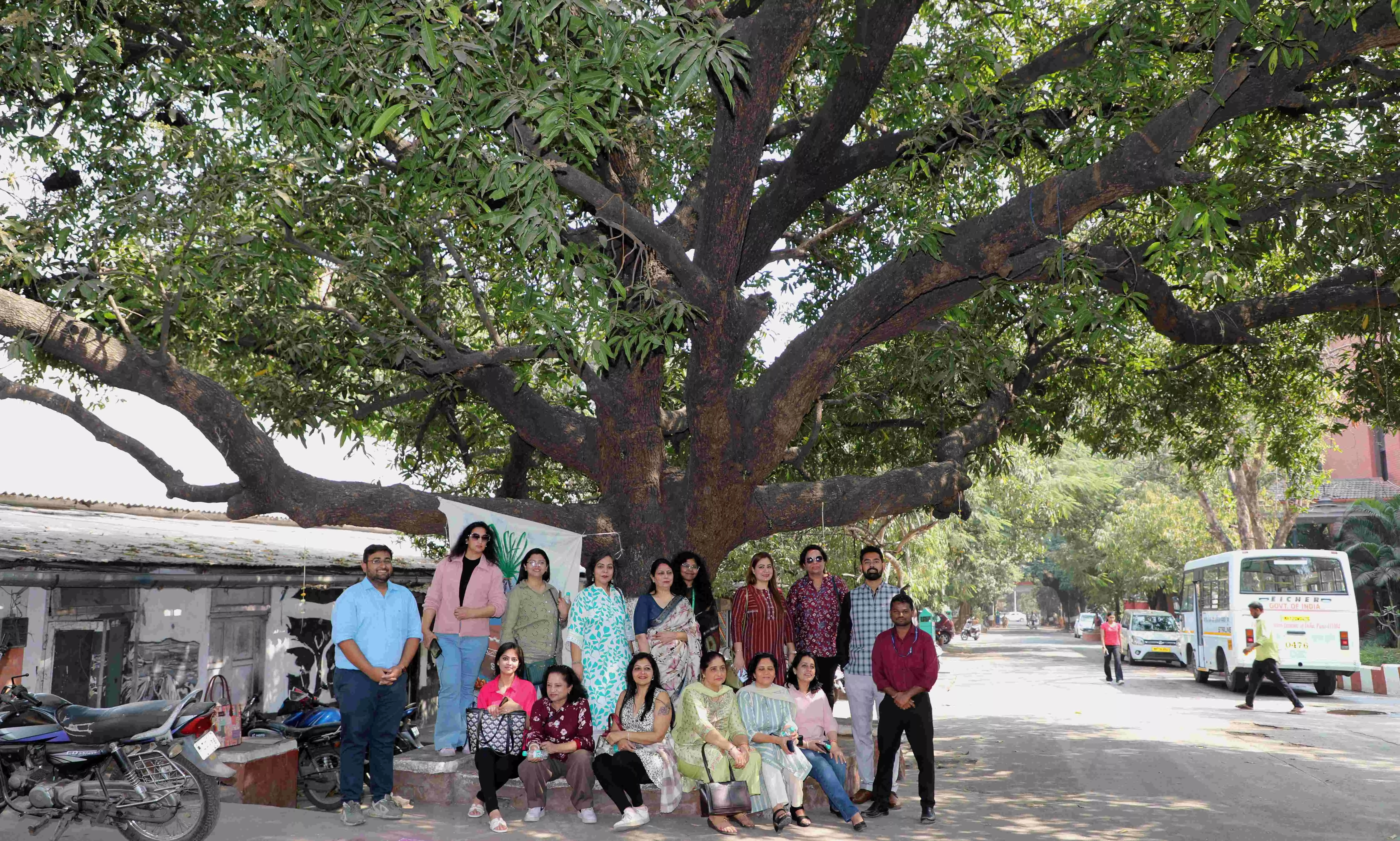
This evolving vision was recently highlighted during a press tour organised by the Press Information Bureau (PIB) Mumbai/ Pune in association with PIB Chandigarh, under the guidance of Dhiraj Singh, VC, FTII along with Supriya Ghaytadak, DD, CBC, RO Pune, Associate professors Sanjay More and Jijoy PR, which offered journalists a closer look at the institute's academic shifts, infrastructure upgrades and cultural initiatives.
A Campus That Carries Memory
FTII's Pune campus, once home to the iconic Prabhat Studios, remains steeped in cinematic history. Its corridors have witnessed generations of actors, directors, editors and technicians learning their craft through observation, experimentation and mentorship.
Yet the campus today reflects transition. Editing suites hum with digital workflows, sound studios echo with new formats and classrooms grapple with questions that didn't exist a decade ago: how to teach cinema when platforms are fluid and audiences fragmented.
Wisdom Tree: Preserving Experience
At the heart of the campus stands a Wisdom Tree that feels larger than its roots and branches. People arrive there without planning to - drawn by instinct rather than invitation. Time has layered it with stories: voices of filmmakers, artists and thinkers who once lingered in its shade, passing on insight not found in classrooms. The space around it has quietly become a meeting ground for songs, ideas, arguments, laughter and pauses in between. Years pass, batches change, yet the tree remains - holding memory, conversation and an unspoken promise that something meaningful might happen if you sit there long enough.
Faculty members describe Wisdom Tree as an attempt to turn lived experience into an institutional resource - ensuring that insights into storytelling, performance, cinematography and sound are not lost to time.
Responding to Education Reform
In step with broader higher education reforms that emphasise flexibility, modular learning and skill development, FTII has begun recalibrating its academic structure. Short-term courses and specialised modules now sit alongside long-form training, allowing students and professionals to engage in film education in varied ways.
New focus areas include OTT storytelling, digital cinematography, contemporary sound design and advanced post-production - all shaped by the realities of a rapidly evolving industry.
Administrators stress, however, that these changes are not intended to dilute FTII's core philosophy. Fundamentals of cinematic language, narrative depth and performance remain central.
Spaces That Reflect Change
Infrastructure upgrades are a visible sign of FTII's transition. Modernised sound studios, post-production facilities and digital archives are being developed to meet current industry standards. At the same time, the institute retains spaces that speak to cinema's tactile past - reminding students that filmmaking is as much about discipline as it is about tools.
The contrast is deliberate. FTII's leadership believes meaningful innovation must be anchored in historical understanding.
Cinema Beyond the Classroom
FTII's role extends beyond professional training. Film appreciation programmes, screenings and public discussions continue to frame cinema as a cultural archive - a record of social change, political thought and artistic expression.
This broader mandate aligns with growing policy recognition that cultural institutions are not merely skill centres, but custodians of collective memory.
An Unfinished Transition
As education reforms and technological shifts continue to reshape creative learning, FTII's journey reflects a careful negotiation rather than a radical rupture. The institute's evolving approach suggests adaptation without abandonment, an effort to remain relevant without erasing its identity.
For students entering its gates today, FTII represents both inheritance and possibility. For Indian cinema, its transformation raises a larger question: how to move forward while staying rooted in the stories that shaped the past.
FTII Legacy
From its classrooms and screening rooms, the Film and Television Institute of India has quietly released generations of artists who went on to redraw the map of Indian cinema. Performers such as Naseeruddin Shah, Om Puri, Shabana Azmi, Jaya Bachchan, Mithun Chakraborty, Danny Denzongpa, Shatrughan Sinha and later voices like Rajkummar Rao, Jaideep Ahlawat, Vijay Varma and Sunny Hinduja, carried with them an approach to acting rooted in depth, restraint and truth.
Equally influential are the filmmakers who emerged from FTII's rigorous creative environment - Mani Kaul, Girish Kasaravalli, Kundan Shah, Vidhu Vinod Chopra, Sanjay Leela Bhansali, Sriram Raghavan and Rajkumar Hirani - each shaping distinct cinematic worlds that continue to influence storytelling across languages and eras. Complementing these visions are craftspeople such as Santosh Sivan and Sudeep Chatterjee in cinematography and Subash Sahoo in sound, whose technical mastery expanded how Indian films are seen, heard and experienced.
Published by HT Digital Content Services with permission from Millennium Post.