
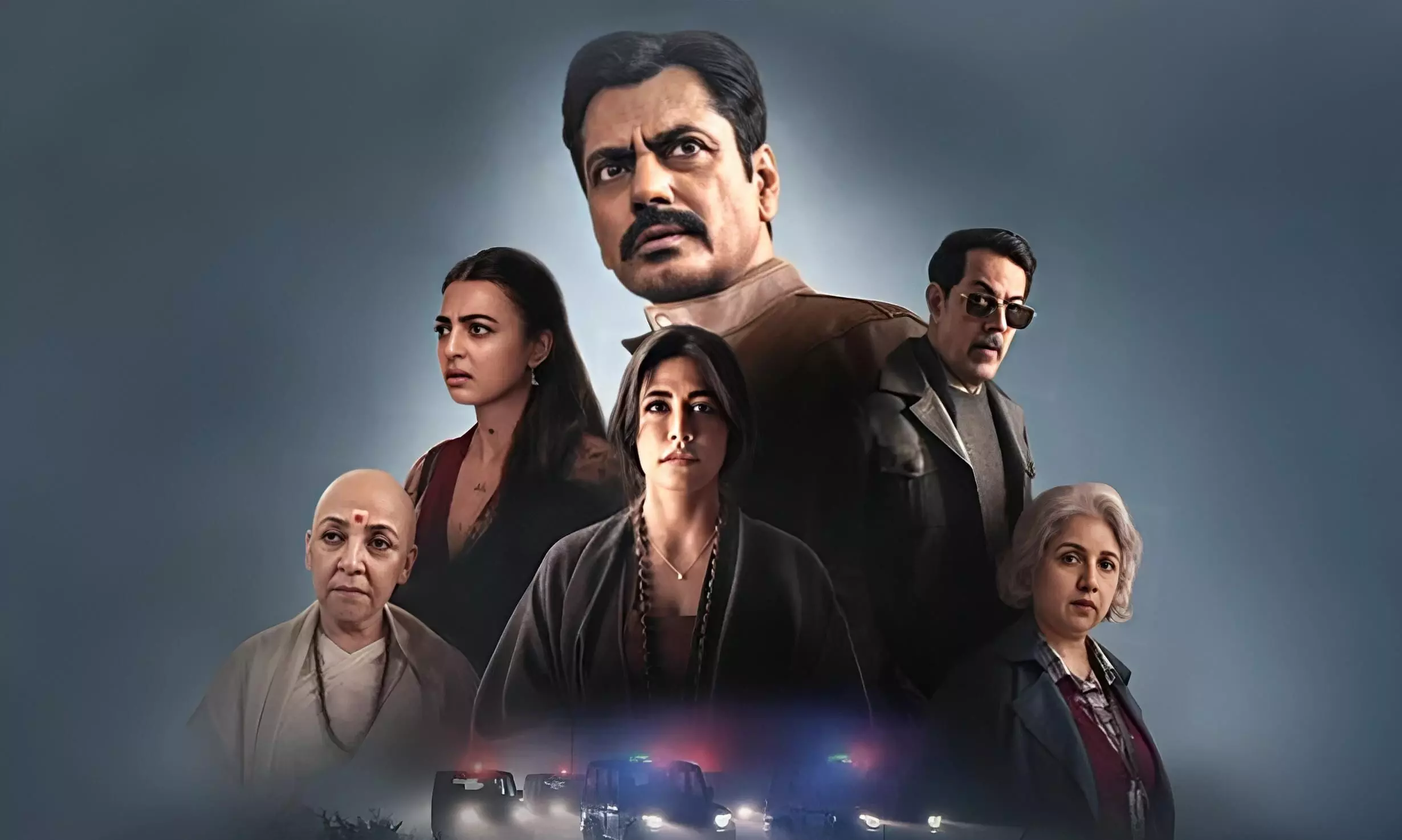
New Delhi, Dec. 22 -- The Bansal Murders streaming on 'Netflix' is less a sequel and more a self-contained extension of Inspector Jatil Yadav's world. Nawazuddin Siddiqui returns to the role, burdened yet understated, a cop beaten into suspicion of the system he serves but determined to do it justice and expose the truth. The case he takes on, a pig's head hurtled into a farmhouse, followed by the almost-total murder of the powerful Bansal family, owners of a media empire.
A shot of dying crows at the top tells you the film is itching to be in a space of discomfort. The film's strongest asset is its atmosphere - the Bansal mansion itself. This is a home burdened by secrets and we can hear in the dark hallways and staircases the whispers of generations of grievance and privilege. Trehan lets the camera hover, allowing silence and geography to do their thing and his film is surest in such stretches. There is a sense that violence here isn't sudden but inevitable.
The emotional anchor of the film is Jatil's relationship with Radha, played by Radhika Apte, who brings warmth to the role, making the character of the partner in such situations relatable without the need for histrionics. Their scenes have a lived-in quality, suggesting an understanding that doesn't always have to be vocalised to be understood, which gives a whole character some humanity and prevents him from sinking into grim monochrome.
The film, where it lacks the most, is in the way it handles the multitude of its spectacular cast, with multiple characters introduced and then left undefined. For example, Chitrangada Singh's portrayal of Neera is emotionless, as well as vague, with no depth and subsequently never comes to life as a character. Deepti Naval's character is a godwoman who has no purpose in the film. Sanjay Kapoor's character is described as 'sharp', but he is hardly ever allowed to showcase that quality. Overstuffed is perhaps the word.
When the film leans into its procedural roots, it finds its groove. There is an interrogation sequence midway that hits the sweet spot - eagle-eyed editing underpinned by silence and purposeful sound design, turning the screws of dread nicely. Unfortunately, this momentum is often compromised by talky passages that dull the mood. The film salvages itself with a neatly done ending. The reversal is surprising but not forced and there is a pleasingly bitter aftertaste in the sense of reappraisal and re-examination it brings along. Class and power lurk silently in the background.
Overall, Raat Akeli Hai: The Bansal Murders is an ambitious crime drama held together by a secure performance from Siddiqui and a strong sense of place. It occasionally suffers from being too long and crowded with characters that diffuse its impact, but it's a solidly engaging if not memorable procedural.
Verdict: Worth watching if you prefer atmosphere-driven procedurals over fast-paced whodunnits
Published by HT Digital Content Services with permission from Millennium Post.